
Cuban Missile Crisis
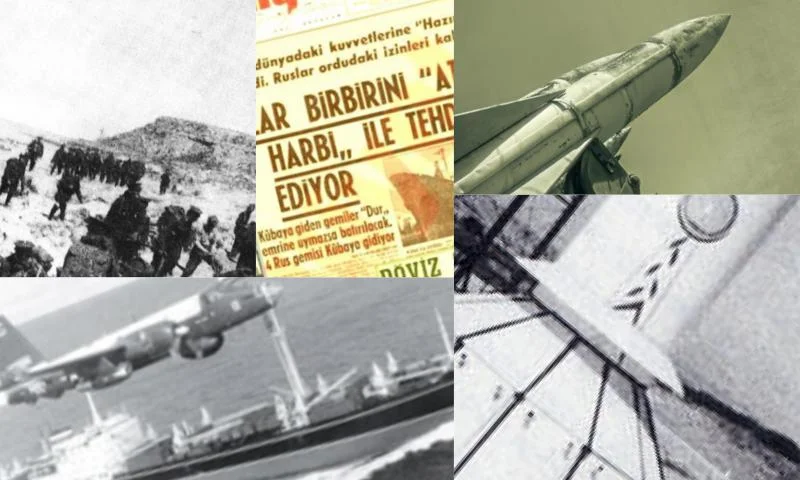
The Cuban Missile Crisis occurred in 1962 when the Soviet Union began building nuclear missile sites in Cuba. The United States did not allow this, and after thirteen tense days and many secret negotiations, the Soviet Union agreed to remove the missiles. This was arguably the closest the United States and the Soviet Union came to nuclear war during the Cold War.
The Road to the Crisis
Before the crisis, the U.S. tried to overthrow Fidel Castro and the current Cuban government with the Bay of Pigs invasion. This invasion failed, but it served as a warning to Fidel Castro. Also, the U.S. had set up several nuclear missile sites in Turkey and Italy that were capable of striking Moscow, the capital of the Soviet Union. As a result, the Soviet Union felt they needed missile sites that could strike the U.S. At the same time, the Cuban government wanted protection from the U.S. They decided to work together and the project to place nuclear missiles in Cuba that would allow the Soviet Union to strike most of the U.S.
How Did the Crisis Start?
On October 14, 1962, an American U-2 spy plane flying over Cuba took pictures of Soviet long-range missiles in Cuba. This was a crisis like none before. These missiles could cause mass destruction with their nuclear warheads if launched at any point in the United States. President Kennedy met with his top security advisors. They considered a range of options from diplomacy to a full-scale attack and invasion of Cuba. The Joint Chiefs of Staff voted to invade. They felt it was the only viable option. However, Kennedy worried this would start World War III between the United States and the Soviet Union. Setting up a naval blockade might work.
The Blockade
Kennedy finally announced this plan on October 22, 1962. He showed the world the missile sites and said that the U.S. would quarantine Cuba. This meant that no offensive weapons would be allowed into Cuba. He also announced that any attack from Cuba on the U.S. would be regarded as an act of war by the Soviet Union. Over the next few days, the crisis escalated. Despite this, the Soviet Union said they would not back down. At this time, Kennedy actually believed that the U.S. should invade Cuba.
Negotiations
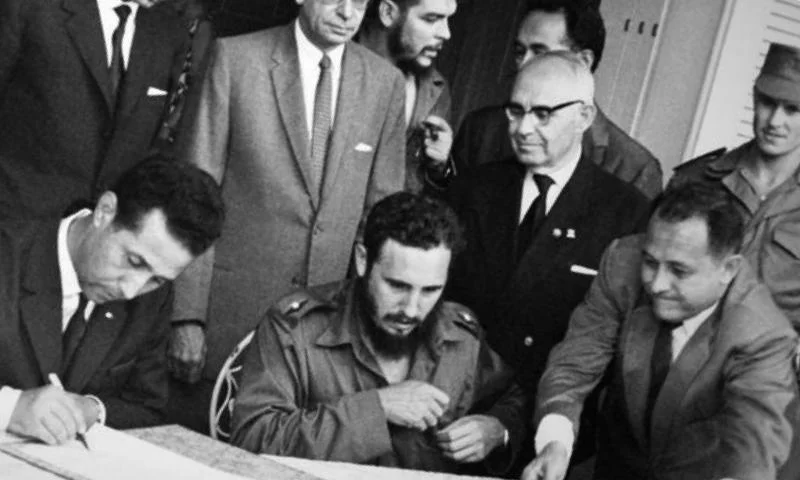
Although the Soviet Union publicly said they would never back down, they were secretly negotiating with the U.S. In the end, the two sides came to an agreement. The Soviet Union would remove the missiles from Cuba as long as the U.S. agreed never to invade Cuba again. Secretly, the U.S. also had to agree to remove its nuclear missiles from Turkey and Italy. And so, the crisis had ended.
Consequences of the Crisis
The crisis was one of the biggest events during President Kennedy's term. His leadership had been called into question after the failure of the Bay of Pigs and the Berlin Wall. But now, the U.S. leader could be trusted again.
Interesting Facts About the Cuban Missile Crisis
- The Soviet Union leader at the time, Chairman Nikita Khrushchev, assumed that Kennedy was weak because of his decisions at the Bay of Pigs and the Berlin Wall. He thought Kennedy would back down and eventually allow the missiles.
- After the crisis, a hotline was set up between the president and the Soviet Union leader from Washington D.C. to Moscow.
- Cuban leader Fidel Castro was not happy that he was left out of the negotiations between Kennedy and Khrushchev.
- Not everyone in the U.S. was happy with the outcome. General Curtis LeMay called it the greatest defeat in U.S. history.
- Khrushchev wrote a personal letter to President Kennedy during the crisis asking them to agree to a settlement to avoid war.





