
What is Origami? How is Origami Made?
What is Origami?
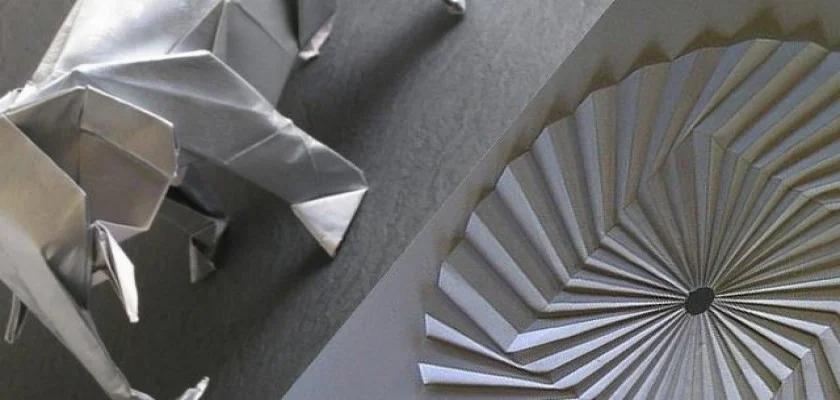
Origami is, in its simplest terms, the art of paper folding. Origami is a Japanese term formed from the combination of the words "oru" and "kami". Oru means folding, and kami means paper. Also known as the traditional Japanese art of paper folding, origami is both a hobby that allows free time to be spent in a pleasant way and a mental activity that contributes to intellectual development. The art of origami, first used by the Chinese, was brought to Japan by Buddhist monks and took its name from the Japanese words "oru" and "kami". Origami, which has been taught as a lesson in schools in Japan since the 1900s, is an activity that greatly contributes to the development of children's mathematical intelligence.
How is Origami Made?
Origami is the creation of shapes such as animals, flowers, houses, cars, etc., by folding paper in specific ways. Very large origami works can be made, just like small origami works. Among the types of origami, classic origami, modular origami, and wet-folding are the most well-known types. In addition, architectural origami, kirigami, and pop-up origami are also widely used. Origami, which relaxes the maker and creates a visually pleasing appearance, is an extremely beautiful and valuable hobby. To do origami, one needs to be patient and enjoy folding and shaping paper.





