
What are the Features of Structural Analysis Software?
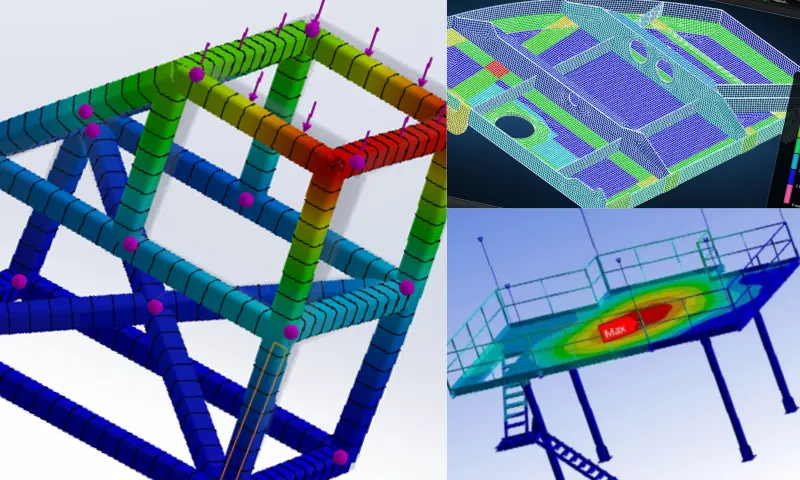
Structural analysis software has various features that enable engineers to evaluate the safety and performance of structures. These software offer advanced modeling tools, allowing for detailed modeling of projects with complex geometries and structural systems. The software includes an extensive material library, which allows for easy definition of the properties of different construction materials (concrete, steel, wood, etc.). It performs precise calculations using advanced analysis techniques such as the Finite Element Method (FEM). You can look at relevant online companies on web pages to get information on this subject and ask your questions, and you can examine them in detail from here.
How are Analyses Performed with Structural Analysis Software?
To perform an analysis with structural analysis software, first, a 3D model of the structure is created in the software. In this phase, structural elements, connections, and materials are defined in detail. Then, the loads acting on the structure are defined. These loads can come from various sources such as dead loads, live loads, wind loads, and seismic loads. Then, the appropriate analysis type is selected, and the simulation is initiated. The software calculates the behavior of the structure under loads using mathematical methods such as the Finite Element Method (FEM). The results include important engineering parameters such as stresses, deformations, and internal forces in the structural elements. These results are used to evaluate the safety and performance of the structural design.
How are Results Verified in Structural Analysis Software?
Verifying the results obtained from structural analysis software is a critical step for the safety of engineering projects. The obtained results are checked based on engineering principles and theoretical calculations. In this phase, it is evaluated whether the software results are logical and within the expected range. The results are verified by comparing them with similar projects or data found in the literature. A comparison of the results can be made by using independent analysis software or a different analysis method.





